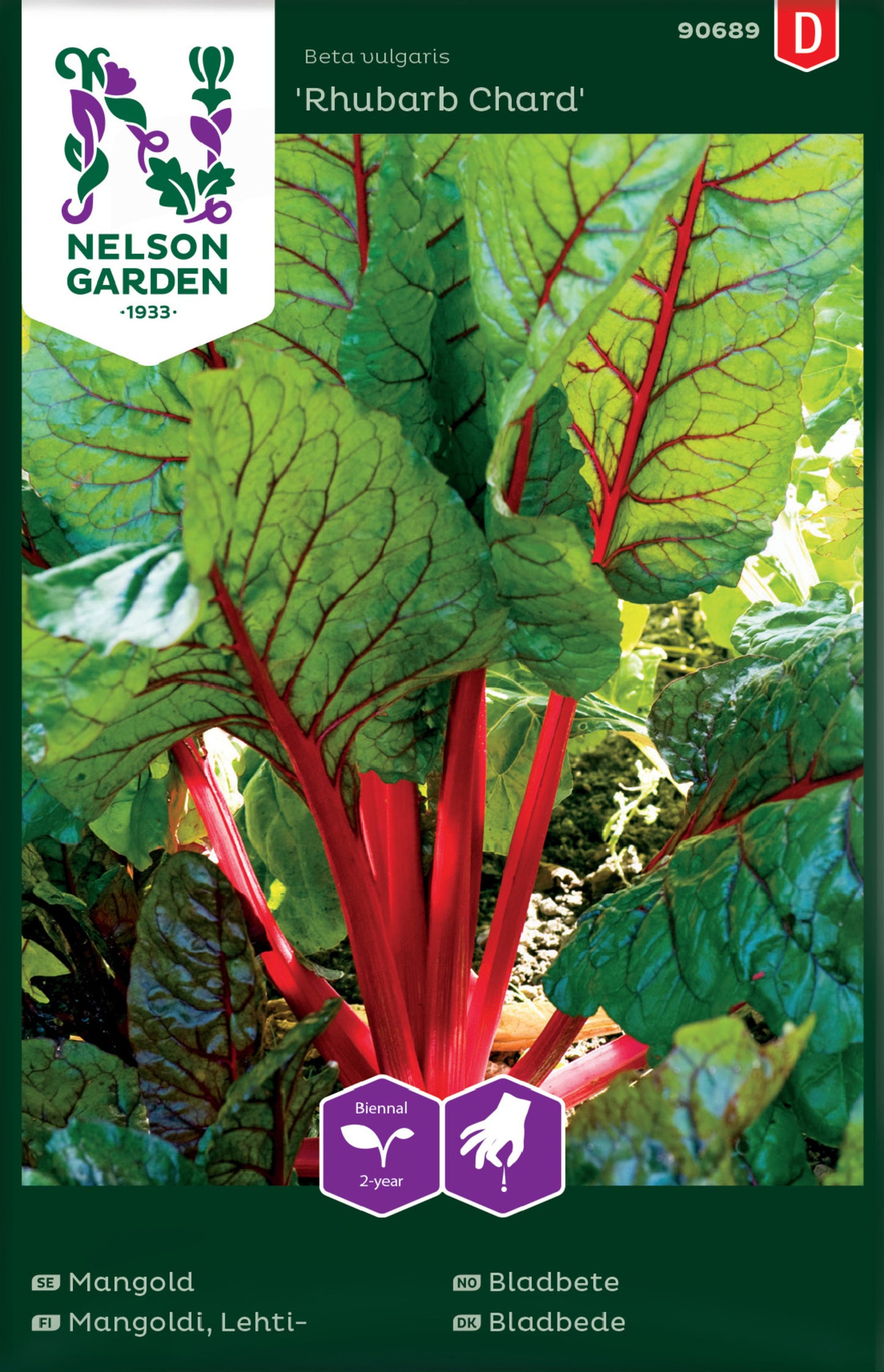
Beta vulgaris
Variety with red leaf stalks. The leaves are used like spinach and the stems like asparagus. Young tender leaves are preferrable for use in sallads. Tolerates a few degrees below zero. Thrives best in a humus-rich, nutritious and well-drained soil.
Chard is highly nutritious and almost a must-grow in the kitchen garden. Chard has a mild taste like a cross between beet leaves and spinach.
Thin out gradually and then harvest leaf by leaf (outermost) or cut the entire plant 2-3cm from the ground. New leaves grow up that can be harvested throughout the autumn.
Often grown as a 1-year-old, but is a 2-year-old plant, which overwinters covered in less harsh climates. Can then give an early harvest before the plant goes into flower in year 2. Thrives in a humus-rich, nutritious and well-drained soil.
Swiss chard is an excellent source of vitamins A and K and a good source of vitamin C, magnesium, antioxidants and fiber.
Pre-cultivation: Not recommended, chard does not transplant well.
Direct sowing: mid-May - end of July, when the soil has warmed up. Water before sowing and keep moist until germination. Sowing too early can result in bolting, the soil should be warm before sowing.
Harvest through late autumn, winter or early spring if covered and the winter has been mild.
Chard can be slow growing at first but a reliable producer once established.
Thrives in nutrient-rich, porous and well-drained soil. Does not tolerate standing water. Do not allow to flower.
Swiss chard is a cool weather plant and if sown earlier in the season can be cut back in late summer to rejuvenate for fall production.
Keep well watered, Swiss chard is fairly heat-resistant with sufficient water.
Trivia - in spite of often being called Swiss chard, chard is not native to Switzerland at all! It originated in Meditteranean Europe.
Plant spacing: 12 cm / 1 plant per GreenStalk pocket
Sow depth, cm: 1
Location: Sun to partial shade
Harvest: July - October
Bi-annual in milder climates of if given winter protection, otherwise grown as Annual
Number of seeds: 150